• HOME

     Image


    I’ve done some odd things the last few years:  put the bills in the icebox, then headed to the mailbox with a carton of milk; gone to change a light bulb, only to put the burned out bulb right back into the socket; sprayed oven cleaner on the windows right after I sprayed Windex in the oven; paid the same bill twice in the same week!   You get the picture.  But today may well have topped them all. 

    The temperature had dropped into the 20’s, so I sat down on the sofa to put on a nice, warm pair of socks before I headed out to the pool.  My bikini was lying on top of my workout bag.  Methodically, I lifted my left leg thinking I was putting on my left sock, but instead, stuck my left foot into the left side of the bikini bottom.  Then just as  methodically stuck my right leg into the other side and pulled up my bikini snug over my sweat pants.  I stood there a moment wondering why my feet were still so cold…………yeah.

    Forgetfulness is apparently in the cards for my future.  For now, I just laugh at myself.  If I had Alzheimer’s, of course, I would forget how to laugh altogether.  So, each day that I do something stupid—and it is most days—I always remind myself to LAUGH.  That way, hopefully, folks won’t think I have dementia and need to go into a home. 

    A close friend called today to let me know that three of his buddies went into Alzheimer’s homes in the last year and all three died within months of moving into them.  “I don’t understand it,” he said, “they were all lovely places but my friends—one of them really healthy— just suddenly up and died.” 

     I understand.  It is hard enough losing one’s mind without losing all sense of one’s place in the world.  A home is a touchstone.  The longer one has lived in it, the deeper its hold on the psyche.  And no amount of granite counter tops or new wall to wall carpet can compensate.  T. S. Eliot once said, “Home is where one starts from.”  I figure it’s also where I want to end up.  Besides, I sure don’t want some stranger seeing me walk around with my bikini on over my clothes.       


  • GET UP AND GO!

    Image

    Had a great laugh this morning when I asked my 90 year-old pal how his ‘get up and go’ was.  “Oh, it’s great,” he enthused.  “In fact, every time I get up I have to go, if you know what I mean,” he confided.  I do.  Frankly, if peeing were an event in the Olympics, seniors would have a jump start on the competition.  Aging is an obstacle course with unforeseen twists and turns that require persistence and humor just to navigate.    

     Everyone deals with it differently, though.  A close friend in his 80’s says he told his kids, “If I ever get to the point where I’m helpless, bring me that bottle in my medicine cabinet.’  “What’s in the bottle?” I asked.  “Xanax,” he replied.  “Well, how do you plan to kill yourself with Xanax?” “I figure if I take enough of it, that’ll do the trick.  I take half a pill every night before bed to help me sleep.”  “Well what if you’re all out by the time you decide to take the whole bottle?”  I queried.  “Hmm,” he replied, “didn’t think about that.” 

     Now there is good reason to be a bit depressed when one looks in the mirror as the decades pass.  But did you know that depression affects both adolescents and the elderly equally.  That’s sobering.  What possibly puts a sixteen year-old on par with one who is sixty?  Some say the common thread is that the young who suffer depression have not yet grasped their sense of identity or purpose.  The old are desperately grasping on to who they were and cannot accept who they are now. 

     This morning, my own ‘get up and go’ was gone.  I just did not want to get out of bed.  Finally, I shuffled into the kitchen to make coffee.  Suddenly, my 17 year-old tore into the room like a wild tornado.  She grabbed a muffin in one hand, drank half a glass of milk with the other, flung her backpack over one shoulder and headed out the garage.  “Bye, Mom,” she yelled.  “Gotta go.”  Talk about inspiration.  Ten minutes later, I was out the door myself and headed to the gym.  Nothing like youth to set fire to the old embers.

     My cure for depressed teens?  Spend the day in a nursing home.  Feeling old and depressed?  Spend a day in high school.     

  •  Image

     12.  A good night’s sleep can happen smack in the middle of the day.

    11..  When your car gets towed, you are actually entitled to a senior discount!

    10.  No one tries to slip a ‘date rape’ drug in your drink. 

    9.  Store clerks don’t try to sell you spandex or stilettos anymore.

    8.  Losing your hearing, particularly at the higher decibels, is a blessing.

    7.  Losing your vision is also a blessing because you actually think you still look good.

    6.  You don’t have to worry about running ‘your own race,’ because no one else is that far behind. 

    5.  No one worries about ‘giving you the gossip’ because they know you’ll forget it by the time you get home anyway. 

    4.  You don’t have to worry about how you look because frankly, no one is looking.

    3. You have all the time in the world to converse with complete strangers who just dialed the wrong number.

    2.  You have a long list of strong, young men at your fingertips.  (Someone has to get that dead squirrel off the roof).

    And the top ten upside of going downhill?

    1.  You don’t need to ‘google’ anything because if you haven’t googled it already, it’s just not worth googling.

    Helen Hudson is the author of, “Kissing Tomatoes,” an Alzheimer’s memoir.

  • put me in a home, i'll put you in the ground

    Finally!  After 3 weeks at the gym, somebody finally talked to me!  Granted, he was 89, had false teeth, a zillion old age spots and was semi-bald, but he actually TALKED to me.  I was so happy, I almost hugged him.  I had contemplated giving up this whole weight-lifting routine—not because it’s hard but because not one, single person even acknowledges me.  Like zombies, they move mutely between machines with their earplugs in and stare at themselves in the mirrors between grunts. 

     I’ve seen one guy at least 5 times and despite my saying, “Hi” every time, he has never said, “Hi” back.  Not once.  Not ever.  Not even a head nod.  Occasionally, if our eyes meet, he just stares at me in a creepy, serial killer kind of way.  I thought he was maybe ‘a bit touched’ in the head.  Nope.  Yesterday, there he was chatting normal as you please with the guy next to him.  So, I gave him my biggest, brightest, bestest smile and said, “Hi.  Here you are again!”  He looked at me, stared blankly, then looked back at the guy next to him and resumed his conversation.

     Even the women are anti-social.  They are either drop dead gorgeous in full makeup with skin tight outfits, or big and sweaty, with rolled bandanas around their necks, lifting ‘dumb’ bells heavy enough to flatten me into a graham cracker.  I learned by Day Two not even to ask them for help.  Once, I asked a ‘personal trainer’ which machine was good for building your core.  She replied snottily:  “If you would like some help, book an appointment with me.”  Unwilling to pay to figure out how the machines work, I either follow after people or start each one at ZERO weight. 

     Until today, I had never seen anyone use a machine called the ‘Preacher Curl.’  Kept wondering what a ‘preacher’ was.  Finally, today, I saw a guy using it.  I watched him intently.  It works the biceps!  He caught me staring and paused mid-bulge.  “Oh,” I smiled, slightly embarrassed, “I see you are curling your preachers!”  He did not think that was funny.  He just looked at ME strangely, stuck his left earplug back in his ear and sauntered away like an upright armadillo. 

    Geez.  Haven’t had this much fun since I visited a morgue in college.  ‘Weight bearing’ exercise is supposed to stave off dementia.  Scares off humans, too.  Frankly, the caption on this photo pretty much sums up my feelings on both nursing homes AND gyms.  And for the record?  I AM NOT GIVING UP!!  I’ll have this place talking in no time. . .even if it’s about me!!!

    Helen Hudson is the author of, “Kissing Tomatoes.”

  • DON’T DIE WITH THIS REGRET

    man in casket

    “I wish I’d had the courage to live a life true to myself, not the life others expected of me,” is the regret most often heard from the lips of the dying.  Those were the findings of an Australian palliative nurse.  So, if this is true about us, does that mean the primary reason for our personal sufferings in life is because we are too fixated on pleasing others?  Can it also be the root of our obsession with youth and beauty?  Is this why so many people who should have rich and happy lives simply don’t?

     This morning I watched a boisterous group of three year-olds play, “Red light.  Green light.”  They had trouble getting started.  By the time the teacher had the last ones properly lined up, the first ones were already wriggling out of their places.  Some hopped on one foot, others giggled and twirled, and one little boy never did get in line.  Corralling them was like trying to stop 18 grasshoppers from twitching and leaping; an impossible feat.

     For the half hour that I watched, the teacher pleaded for them to “stand still,” “listen to me,” “don’t push Sally,” “stay on the blue line,” “get back in order,” “no talking,” and on and on.  When I left, I realized that of the 30 minutes they had for the game, they only actually played about 10 of them.  Maybe our lives are like that:  two-thirds of the time we align ourselves with the group, or are forced to.  The other third we try desperately to be our unique selves and navigate our independent joys.

     One would hope that with maturity, we ‘grow out of it.’  However, if that list of regrets is accurate, we just may not.  So, I wonder.  When my own children reach adulthood, will they have found the unique qualities which make them individuals and pursue them?  Or will they, like many, be so influenced by their peers and society that their own true selves get lost in the shuffle?

     My grandmother always said, “Example is the greatest teacher,” and she was a great one.  These days, though, the young take theirs from computer screens, not flesh and blood people.  They are better ‘talking’ with their thumbs than their voices.  So, what will be their dying regrets?  That they didn’t speak up?  In the end, maybe that is the very, same thing.

    Helen Hudson is the author of, “Kissing Tomatoes,” a non-fiction memoir of her grandmother’s Alzheimer’s.

  • TEN FEET TALL

    Image


    Okay, so maybe I was putting off my new gym routine workout.  Or maybe I was looking to add that ‘new hobby’ all the experts say is important at my age.  But the way I see it, that 8 year-old making baskets all by himself at the Y last week just needed a little friendly competition. . .and I was ready. 

     He was watching the six-foot plus guys play pickup.  His big-eyed stare lingered on every swoosh and lay up they made.  Then, with a slight sigh in his shoulders, he dribbled and shot a few hoops of his own at an adjoining basket.  Considering he stood little more than four feet, he was pretty darn good. 

     I opened the door and stepped inside.  He looked up at me as if I had just walked into the “Mens’” room by accident.  Naked.

     “Hey,” I said, trying to sound as normal and casual as possible.  “Want someone to shoot with?”  Imagining how out of place I must have looked to him, I was completely prepared for rejection.  To my utter surprise, his eyes opened wider and he said, “Sure.  Wanna play H-O-R-S-E?”

     Oh boy, did I.  Back in elementary school, I had a pretty mean “granny shot.”  Even the boys were envious of my rather impressive string of baskets made from the foul line.  Granted, that was 50 years ago, but still how hard could this be?  I had already lived more years than he weighed! 

     He didn’t pause for introductions or rules.  He just started dribbling like mad and banked the first shot right into the basket.  Then he threw the ball my way.  “Now you have to do the same shot I just did,” he said with a serious look.  I took a few steps and dribbled.  I eyed the spot on the backboard where I knew I needed to hit, and in it went.  “You’re not bad,” he informed me as I passed him the ball.  Then, he dribbled straight to the foul line.  When he missed, I actually heard myself breathe a sigh of relief.    

     Ten minutes in, we were tied at, “H-O-R-S.”  I figured that was a good place to stop.  We said our farewells and he went back to his own game with a slight lift in his shoulders.  I left feeling the same way and headed towards the dumbbells, (which are aptly named by the way).  Neither of us had the satisfaction of winning nor the deflation of defeat.  That’s a nice place to be.  Funny how ten minutes can make you feel ten feet tall.    

     * Read an interview with Helen in the September 2013 issue of Counseling Today. 

  • BEYOND THE BEND

    piano hands

    I visited a hospital twice this week:  first to see the newborn son of my handyman and then to sing to my ninety year-old, dear friend as he drew his last breaths.  Odd as it may seem to the reader, both were joyous events.  The first because I glimpsed the future in the face of that baby boy as his teary mother cradled him close.  The second because I reflected on all of the lives touched and forever changed by my friend of 35 years.  His life literally made others sing and both the Oak Ridge Boys and Vince Gill sang at his funeral.   

    If you’ve read my previous musings, you know that I value age and all the baggage it bears.  The elderly have had their past while the young are still figuring out how to make it.  The beauty is they need each other:  having young people in their lives keeps the elderly hopeful; having older people in their lives keeps the young mindful. 

     As a kid being raised by my grandmother, I was forced into being around all those wrinkled, arthritic, slow-moving creatures.  Some were fascinating, like the crony of my great-grandmother who had a talking Myna bird.  Others just gave me the creeps.  All of them were full of yarns about the days gone by.  Their stories warned me where not to go in my own life, but they also gave me glimpses of where to seek joy on roads that I had not yet taken.  I figure if I’m really lucky, my own journey will last as long as theirs.  So I listen and watch.  They are me, someday.  

    The poet, May Sarton, wrote this about aging:  “The trouble is, old age is not interesting until one gets there. It is a foreign country with an unknown language to the young and even to the middle-aged.” So, I am learning the ‘language’ as I go in hopes of discovering what lies for us all. . .beyond the bend. 

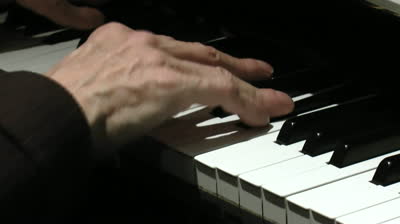
    Here’s the thing:  I love learning from the young about new music, dances, technology and lingo.  However, If I were given the choice to hear one final, favorite melody in my life, I would not choose some current song downloaded on my iPod.  I would ask to hear Chopin played on a Steinway grand by well-seasoned hands.  That would be bliss.


  • BLOW THE WHISTLE!


    lifeguard

    Yesterday, the pool where I swim was packed with about 50 kids.  I was in the middle of my laps when suddenly the lifeguard above me blew his whistle.  “Hey, you guys,” he bellowed in his 20 something, baritone towards the far side of the pool, “She said STOP!”  I paused to look over.  Two little boys were apparently bothering a little girl.  They looked up at the guard, looked back at the girl and moved away.  I wondered how he even observed the threesome so far away and in the flurry of all those screaming kids. 

     “Good for you,” I said to him.  “Above and beyond the call of your job description, I think.” 

    “Well, they’ve got to learn sometime,” he said matter-of-factly.

     Indeed, they have ‘got to learn sometime.’  We all do.  Truth is, what we don’t learn well from our parents at home will be taught to us by the world whether we like it or not.  From that first speeding ticket to the finance charge on the credit card we neglected to pay on time, we are learning lessons constantly.  Like that guard, we should also be teaching them.  When you witness events that are disturbing or might put another in danger, don’t be afraid to blow your whistle. 

     In my 20’s, I saw a mother slap her toddler for reaching for something on a grocery store shelf.  When the child began crying, she slapped her again and told her to, “Stop crying!”  When the child cried even louder, she grabbed her ponytail and began pulling her down the aisle.  I couldn’t take it any longer. 

     “I am getting the manager right now,” I said as sternly as I could.  “You are hurting her.”

    “Don’t you DARE tell me how to handle my child,” the woman huffed.

     Now, to be honest, I did talk to the manager, but what I said was fairly innocuous.  In the years since, I have become more adept at doing the right thing as opposed to the ‘politically correct’ thing—which to my mind is tantamount to little above dead silence.  A year ago, I informed a mother that her son was doing hard drugs.  It was a difficult call, made more so by her flat out denials and hostility.  Recently, I heard that she put him into treatment.  She has not spoken to me since.  I can live with that.


  • ARE YOU NORMAL?

    Image

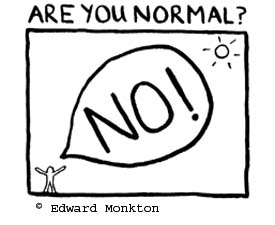
    Chances are if you don’t think you are, you really are.  It’s the people who think they ARE normal that are frankly, wacky.  For years, I have conducted my own completely, unscientific research and found the above to be quite true.  Check it out yourself.  Ask a group of friends and most will likely tell you they aren’t exactly, ‘normal.’  Then ask a few who  are clearly off the radar and see what they say.  It will blow your mind.

    Recently, I chatted with a friend who’s a psychiatrist.  He said that working with diseases of the mind is infinitely more difficult than dealing with those of the body.  Why?  Because with diseases of the body, say diabetes or high cholesterol, people take action.  Their doctors say, ‘You must take insulin or your liver will shut down,’ or ‘You must take statins to lower your cholesterol or you could have a heart attack.’  But when he makes a diagnosis of say, ‘ADHD,’ and suggests medication, often the patient, ‘feels they are just fine,’ so sees no need to follow his advice.

    “It’s criminal, really,” he confides.  “Because if I were an MD and my patient had a broken leg and I did NOT set it and put it in a cast, I could be sued.  But as a psychiatrist, if I say, ‘You are in a cyclical depression and need to take medication to help you get out of it,’ they can’t really feel or even see the urgency of the problem.  Their thinking gets in the way.  With the mind, the problem itself is the problem.”

    He makes an extraordinary point.  We do not think of the mind in the same way that we do the body.  Even with expanding technologies from MRI’s to mapping neural connections, the brain is still a complex and hidden mystery.  If we bleed, we reach for a bandage.  If we feel the pain of a broken bone, we get an x-ray.  If there are gaps in our thinking–well– there are gaps in our thinking. 

    Many people live their entire lives with mental illness and do absolutely nothing to help themselves.  How can they?  They think they’re fine.  We’re the crazy ones to them.  Albert Camus said that, “Some people expend tremendous energy merely to be normal.”  Guess that means it’s easy as pie to be out of your mind.